
Checking for a Warrant in Carthage
A Carthage warrant check starts with whatever paper you already hold. Pull out the citation, notice, case number, or police record first. The town publishes no warrant list, no warrant phone line, no surrender page, and no bond form. Work from the town record to the actual court file in MyCase, and let the Clerk confirm the order.
- Call Carthage Police at 765-565-6062 to identify whether a citation or report originated with the town.
- Search Indiana MyCase by exact citation or cause number.
- If needed, search by full name and date of birth, then filter to Rush Circuit and Superior Courts.
- Read the chronology for warrant, failure to appear, bond, recall, quash, or hearing events.
- Call the Rush County Clerk at 765-932-2086 and the named court for current confirmation.
For county service, custody, or a planned surrender on a Carthage matter, call the Rush County Sheriff at 765-932-2931. No town office can promise what the issuing judge will require.
Carthage Town Hall Shares the Police Role
Carthage runs on two police forces, and that is its key local distinction. The county-hosted Carthage comprehensive plan puts the Carthage Police Department inside Town Hall, while the Rush County Sheriff's Office also serves the town. That dual arrangement does not give both offices the same records or the same authority. For population context, the Census incorporated-place table is the official source for Carthage.
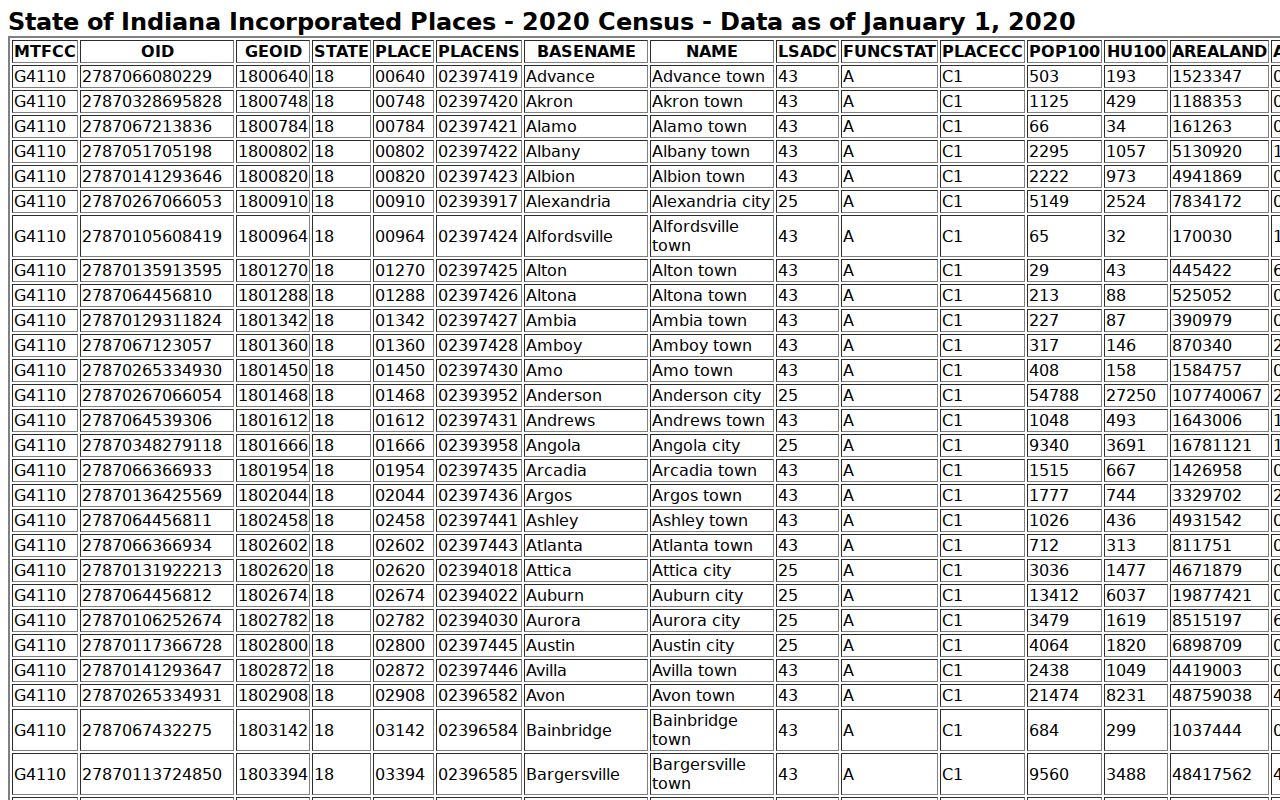
That table confirms Carthage as a distinct incorporated place. It is not a court directory or warrant roster.
The population figure is civic context, not a warrant count. No official Carthage warrant volume exists to estimate from, so treat any number of open warrants involving town residents as unknowable. Two shortcuts deserve resistance. Don't treat the police phone as a court warrant line, and don't read the Sheriff's county role as proof the Sheriff issued the order. The police can help trace the source of a case. The court record establishes the filing, and the issuing judge controls the warrant's status.
Carthage Police and Municipal Court
Carthage Police works out of Town Hall at 6 West First Street, Carthage, Indiana 46115, with a public phone of 765-565-6062. Call the local contact to identify a town citation, report, or officer. Emergencies go to 911. The department posts no online warrant search, active roster, most-wanted page, records form, or recall process.
Carthage Police and Town Hall
Use the town contact for a city citation or police-record question and to learn where a matter was forwarded.
Rush County Courts
No Carthage Town Court appears in Indiana's current directory or Odyssey list. Rush Circuit or Superior Court controls a Rush-filed warrant.
A web result for a court in some other place named Carthage is no substitute for the Rush County record. Check the Indiana county and court on the docket before trusting it.
Carthage Has Dual Police Coverage
The town plan also names the Sheriff as serving Carthage. That makes the Sheriff's main line a proper fallback for questions about service, custody, or surrender on a Rush County warrant. What the Sheriff does not publish is a searchable warrant roster, a direct warrant-unit line, or walk-in instructions.
Local distinction: Carthage Police can identify the town source, while the Sheriff and court handle different county service and judicial functions.
Ask each office only the question it can answer. A town police report request, a service inquiry, and a request for a warrant order belong to three different record keepers. Say someone holds an old Carthage citation. First ask Town Hall or the police whether the town issued it and where it was sent, then run the ticket number through MyCase to find the filed case. If a Rush judge issued process, only the court answers the legal-status question, and only the Sheriff can say what it discloses about service or custody. Keeping those questions apart prevents a police-record answer from standing in as a court-status confirmation. The same division applies when you are helping a family member. Preserve the person's notice and exact identifiers, and leave broad name searches to the public MyCase system rather than asking either law-enforcement office to run one.
Carthage Warrant Types
One Carthage traffic stop can leave records at several levels, and not every enforcement document is an arrest warrant. Indiana terminology and the court chronology control what each record means.
| Record Type | Possible Carthage Origin | Record Holder |
|---|---|---|
| Traffic or FTA warrant | Town citation or missed court setting | Rush court assigned the case |
| Bench warrant | Required appearance missed in a pending case | Issuing judge and Clerk |
| Arrest warrant | Charge after an investigation | Issuing court; Sheriff serves |
| Writ of attachment | Civil appearance order | Court shown on the docket |
| Search warrant | Evidence-gathering authority | May be restricted during investigation |
An Indiana tax "sheriff warrant" is a collection lien, not a power to arrest. It belongs with the DOR and INTIME route, not a Carthage criminal-warrant check.
Exact Carthage Citation Numbers Matter
MyCase supports case, citation, cross-reference, name, and attorney searches. A citation number has no uniform format. It often must be entered exactly as stored in Odyssey. If the ticket number fails, search by last name, first name, middle name, and date of birth to locate the Carthage filing. Sounds-like matching and a trailing starts-with wildcard help only when used with care.
| Search Choice | Use It When | Check Next |
|---|---|---|
| Citation | The original ticket is available | Match agency and filing court |
| Case number | A court notice gives a cause | Read all later events |
| Name | No number is known | Add birth date and court filter |
| Status | Results are numerous | Review Open and relevant Closed cases |
MyCase is free public case information for Carthage, not a certified record. It can carry errors or omissions and may leave out confidential material.
Inside a Carthage Warrant Record
Test a court case match across several fields. The newest entry on the docket matters most. A later order can recall, quash, serve, or otherwise resolve earlier Carthage process, so the search-result caption is not the last word.
| Cause or citation number | The court case identifier or exact ticket value, represented here as CITATION NUMBER. |
|---|---|
| Party and caption | Public identifiers used to avoid confusing similar names. |
| Issuing agency | Carthage Police, Sheriff, or another agency when shown. |
| Issuing court | Rush Circuit Court 70C01 or Rush Superior Court 70D01. |
| Docket events | Hearing, FTA, warrant, service, return, bond, recall, or quash. |
| Financial entry | A public balance that may lag and should be confirmed with the Clerk. |
A historical warrant notation does not prove that process remains active today.
Carthage Infractions Route by Filing Month
Carthage tickets do not stay in Carthage. Rush local rule routes infractions filed in odd-numbered months to Superior Court and those filed in even-numbered months to Circuit Court. So a town-issued ticket is never paid to a Carthage court. You must map it to the county court shown in MyCase. One caution: the filing month can differ from the day the officer wrote the ticket. Check the actual case record instead of guessing the assignment. Circuit Court answers at 765-932-2078. Superior Court answers at 765-932-2078's counterpart, 765-932-3520. Both sit in the Rush County Courthouse in Rushville. If the filing has not appeared yet, follow the timing and contact directions printed on the citation. Carthage Police can tell you where the ticket was forwarded, but confirm the court in the docket before sending any payment. The statewide ePay service may show a payment option only when the court and case qualify. A Carthage resident should read nothing into a missing button. It does not mean no amount is due. A visible button does not mean payment alone clears an FTA either. The Clerk holds the current financial information. The court explains whether an appearance, reset, bond, or motion is also required.
How Carthage Warrants Fit the County System
Carthage has a town police contact but no town court of its own. A local citation or investigation can still become a Rush Circuit or Superior case. The judge issues the court process, the Clerk keeps the official case record, and Carthage Police or the Sheriff may carry out lawful arrest duties. Indiana offers no public statewide active-warrant search.
Warrant flow: Carthage Police or Town Hall › Rush Circuit or Superior Court › Rush County Sheriff
The wider routing and resolution roles are laid out in the Rush County warrant records overview. In Carthage, the practical job is simpler. Preserve the town source and trace it to the exact filed case.
Resolving a Carthage Court Matter
Carthage publishes no payment or recall form for this. Once a docket shows an FTA or warrant, call the issuing court rather than assuming online payment is enough. Ask whether the judge wants payment, a reset request, personal appearance, court-set bond, or a filed motion. A lawyer can weigh the risks and options before you appear.
- Confirm the exact case and latest public event.
- Call the Clerk for current balance and document access.
- Call the named court for the judge's required next step.
- Contact the Sheriff before a planned surrender.
- Verify the later docket for a recall or other resolution entry.
No Rush-specific bond schedule, after-hours window, or surrender handout exists. So do not count on cash, a card, or an unscheduled walk-in resolving a Carthage warrant.
Carthage Warrant Records and Public Access
Town police records fall under the Indiana Access to Public Records Act, Indiana Code 5-14-3, with its statutory exceptions. Indiana's court-access rules govern court records instead. Some material may not be open to the public or available remotely. That includes sealed, expunged, juvenile, protection-order, pretrial, investigatory, and certain pre-arrest information.
Key rules:
Indiana Code 5-14-3 governs requests for existing public agency records, including applicable exemptions.
Indiana court access rules separate public, party, and attorney access to case documents.
Indiana Code Title 35 describes criminal warrant requirements and procedure.
A blank web result does not prove that no warrant exists. Confirm any known Carthage matter with the Clerk and the court.
Carthage Requests Need a Specific Record
The Rush County Clerk is the court-record fallback, at 101 East 2nd Street, Room 209, Rushville, Monday through Friday from 8:00 a.m. to 4:00 p.m. Staff will not run broad criminal or civil searches. Your request should name the cause number, case name, document wanted, filing date, and your own name and address. The county's posted fees are simple. Hard copies run $1 per page. Certifications cost $3 each. Emailed copies carry no fee. Certified copies are mailed or picked up. These charges buy copies, not a Carthage warrant search or a judicial recall. For a Carthage police record, identify the specific report or existing item you want. APRA does not force an office to build an all-warrants list or certify that a person has none. A narrow request can seek an existing report tied to a known date or citation. Court documents stay with the Clerk even when Carthage Police created the first local record. If part of a record is withheld, ask which rule applies and whether a non-exempt portion can be produced.